
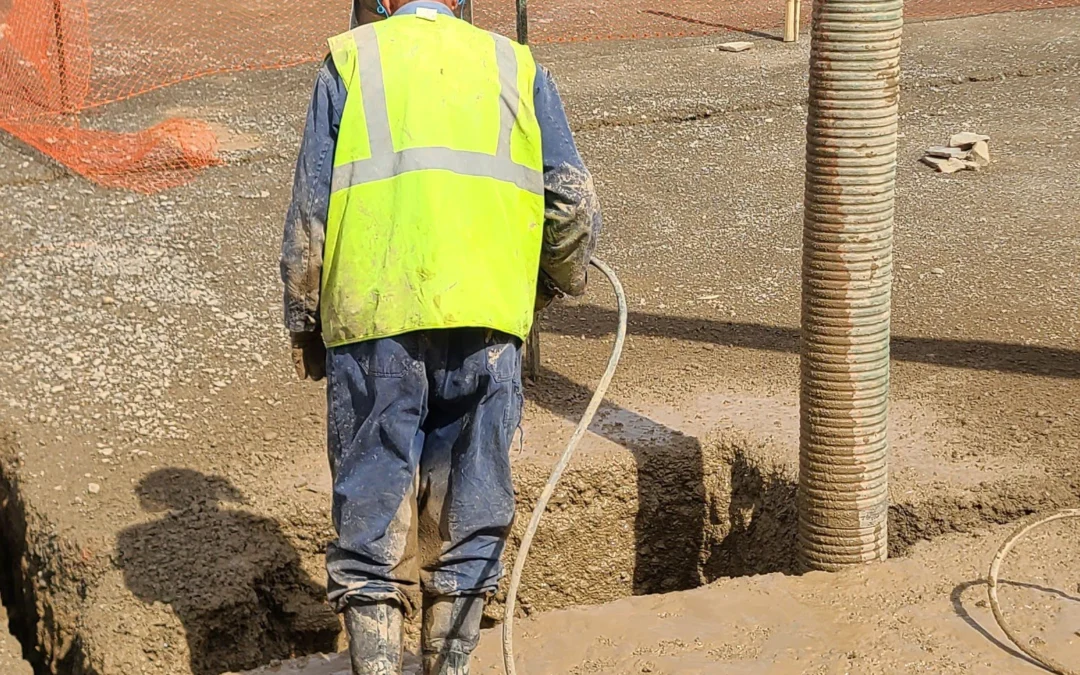
If you’ve managed a construction or utility project in the Piceance Basin, you already know the ground beneath Western Colorado isn’t simple. Between dense oil and gas pipelines, aging irrigation infrastructure, and utility lines that were never mapped as accurately as they should have been, digging blind with a backhoe is a gamble a lot of contractors can no longer afford to take.
That’s why more project managers and utility contractors across Garfield County and the broader Western Slope are switching to hydro-excavation. Here’s a straightforward look at hydro-excavation vs. traditional digging, and why the switch matters more here than almost anywhere else in the state.
What Is Hydro-Excavation?
Hydro-excavation, sometimes called hydrovac excavation, uses a combination of pressurized water and a powerful vacuum system to break up soil and safely remove it, rather than relying on the mechanical force of a backhoe bucket or excavator blade. The water loosens the soil, and the vacuum immediately extracts it into a debris tank, leaving a clean, precise hole behind.
Because the process doesn’t rely on brute mechanical force, it’s classified as non-destructive excavation a method specifically designed to expose underground utilities and infrastructure without the risk of striking, cracking, or severing them.
Why Traditional Digging Is Riskier Than It Used to Be
Traditional excavation methods were developed for a time when underground infrastructure was far less dense than it is today. In Western Colorado, decades of oil and gas development have left the ground crisscrossed with pipelines, some of which aren’t documented with the precision modern projects require. Add in irrigation infrastructure that’s often older than the utility maps themselves, and a traditional excavator operating on assumptions rather than certainty becomes a serious liability.
A single utility strike can shut down a job site for days, trigger regulatory reporting requirements, and in the case of a gas line strike, create a genuine safety emergency. Compare that to the cost of a hydrovac crew exposing the same utility safely in a fraction of the time, and the math starts to make itself.
Vacuum Excavation vs. Backhoe: A Side-by-Side Look
When contractors weigh vacuum excavation vs. backhoe methods, a few key differences stand out:
Precision
A backhoe operator relies on utility locate markings and experience to avoid underground lines, but the bucket itself has no way of “knowing” what’s beneath the surface. Hydro-excavation, on the other hand, allows crews to expose utilities with pinpoint accuracy, because the water and vacuum system won’t damage pipe, conduit, or cable the way a steel bucket can.
Safety
Traditional digging near known utility lines requires extreme caution and often manual hand-digging once locates are exposed a slow, labor-intensive process. Hydrovac trucks handle this safely and far more efficiently, dramatically reducing the risk of utility strikes, worker injury, and unplanned project delays.
Speed and Efficiency
It’s a common misconception that hydro-excavation is slower than mechanical digging. In practice, hydrovac crews often complete utility exposure work faster than a traditional crew would need for the combined process of careful mechanical digging plus manual hand-digging near sensitive lines.
Site Disruption
Hydro-excavation typically leaves a cleaner, more precise excavation site with less surrounding soil disturbance. This matters on active job sites where minimizing disruption to surrounding infrastructure, landscaping, or ongoing operations is a priority.
Spoil Management
One advantage traditional digging still holds is that it doesn’t require managing slurry spoils the way hydro-excavation does. That said, most hydrovac companies including our team handle spoil transport and disposal as part of the service, so this is rarely a burden that falls on the contractor.
Hydrovac Benefits for Construction Projects in the Piceance Basin
For contractors and utility companies working in Western Colorado specifically, the hydrovac benefits for construction go beyond general safety advantages:
- Utility locating and daylighting near dense oil and gas pipeline networks before mechanical excavation begins
- Reduced liability in a region where pipeline strikes carry serious safety and regulatory consequences
- Compatibility with irrigation infrastructure, much of which predates modern utility mapping standards
- Cold-weather capability, since hydrovac equipment can be used for frozen ground conditions that would otherwise slow traditional digging during Western Colorado winters
- Reduced site restoration costs, thanks to the smaller, more precise excavation footprint
When Should You Choose Hydro-Excavation?
Hydro-excavation isn’t necessarily a replacement for every excavation task, but it’s the clear choice in several common scenarios:
- Exposing utilities before trenching or mechanical excavation begins
- Working near known or suspected oil and gas pipelines
- Excavating in tight or congested areas where multiple utilities may be present
- Potholing to verify utility depth and location before design finalization
- Any project where a utility strike would carry significant safety, financial, or regulatory risk
If your project checks any of these boxes, it’s worth bringing in a hydrovac crew before the first bucket ever touches the ground.
Working With a Local Hydrovac Team
Western Colorado’s terrain, climate, and dense underground infrastructure require a crew that understands the region not just the equipment. Our team provides hydrovac services across Colorado and Utah, with the local knowledge to navigate the specific utility risks contractors face throughout the Piceance Basin and surrounding areas. Learn more about our full capabilities on our hydrovac services page.
We proudly serve contractors and operators throughout the region see the full list of communities we work in on our areas we serve page. And if you want to know more about the team behind the equipment, our who we are page shares our background and approach to safe, reliable excavation work.
Getting Started With Hydro-Excavation
Switching from traditional digging to hydro-excavation doesn’t require overhauling your entire project approach it simply means bringing in the right equipment and crew for the parts of the job where precision and safety matter most. Many contractors start by using hydrovac services specifically for utility exposure and potholing, then expand its use once they see the time and risk savings firsthand.
Ready to bring a safer, more precise excavation method to your next project? Contact our team or visit our homepage to learn more about our hydrovac services throughout Colorado and Utah.
Frequently Asked Questions
Hydro-excavation can have a higher hourly rate than a backhoe, but when you factor in reduced risk of utility strikes, faster utility exposure, and less need for manual hand-digging, many contractors find the total project cost comparable or lower especially on projects near known utility lines.
Yes. Hydrovac equipment is well-suited for cold-weather excavation, including frozen or partially frozen ground conditions that are common during Western Colorado winters.
The soil and water mixture, known as spoil, is collected in the truck’s debris tank and transported for proper disposal, keeping the job site clean and minimizing environmental impact.
While requirements vary by project and pipeline operator, non-destructive excavation is increasingly the preferred or required method for any digging near known pipeline infrastructure, given the safety risks associated with mechanical strikes.
If your project involves digging near known or suspected underground utilities, dense infrastructure, or areas without fully reliable utility maps, hydro-excavation is generally the safer and more efficient choice.